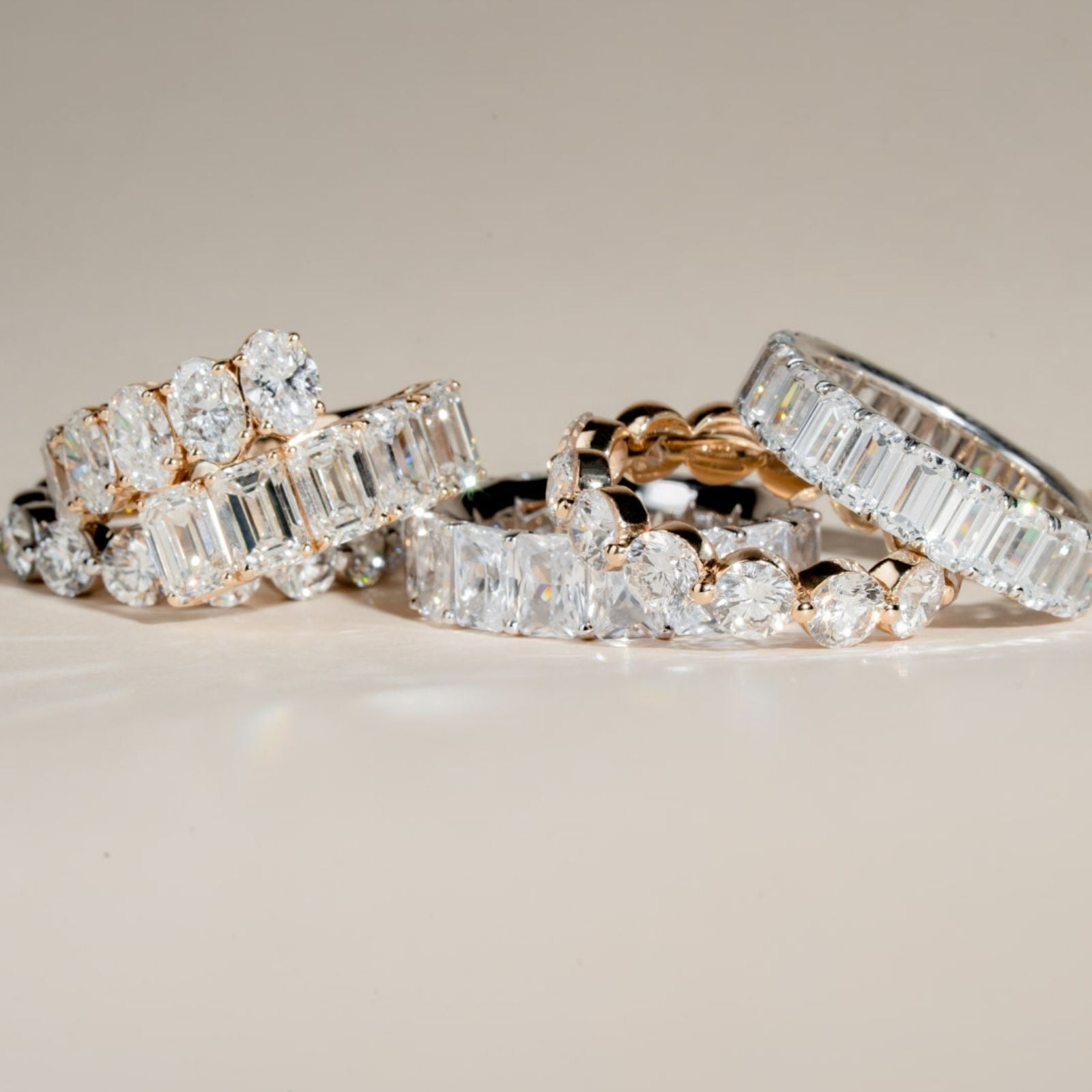
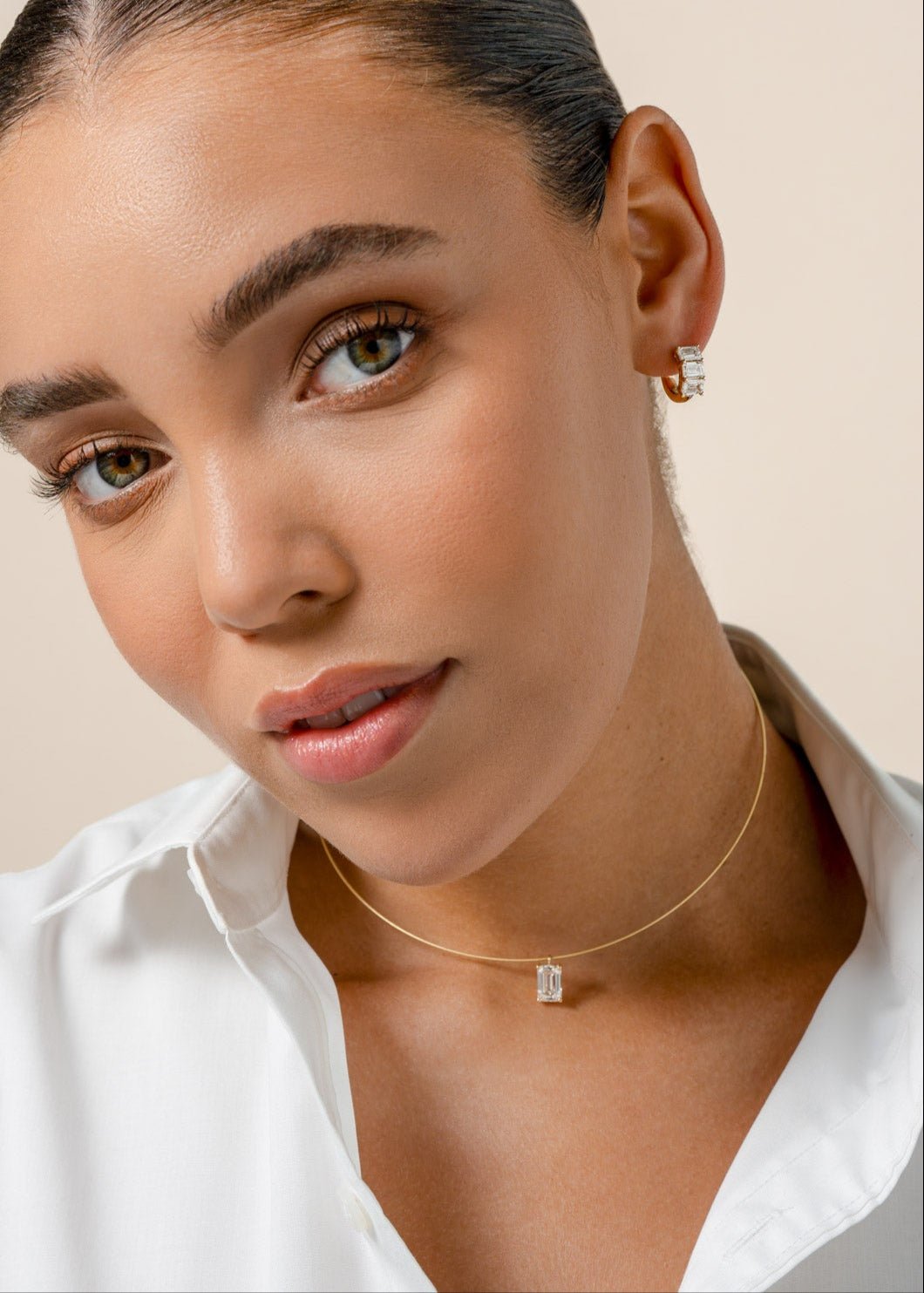
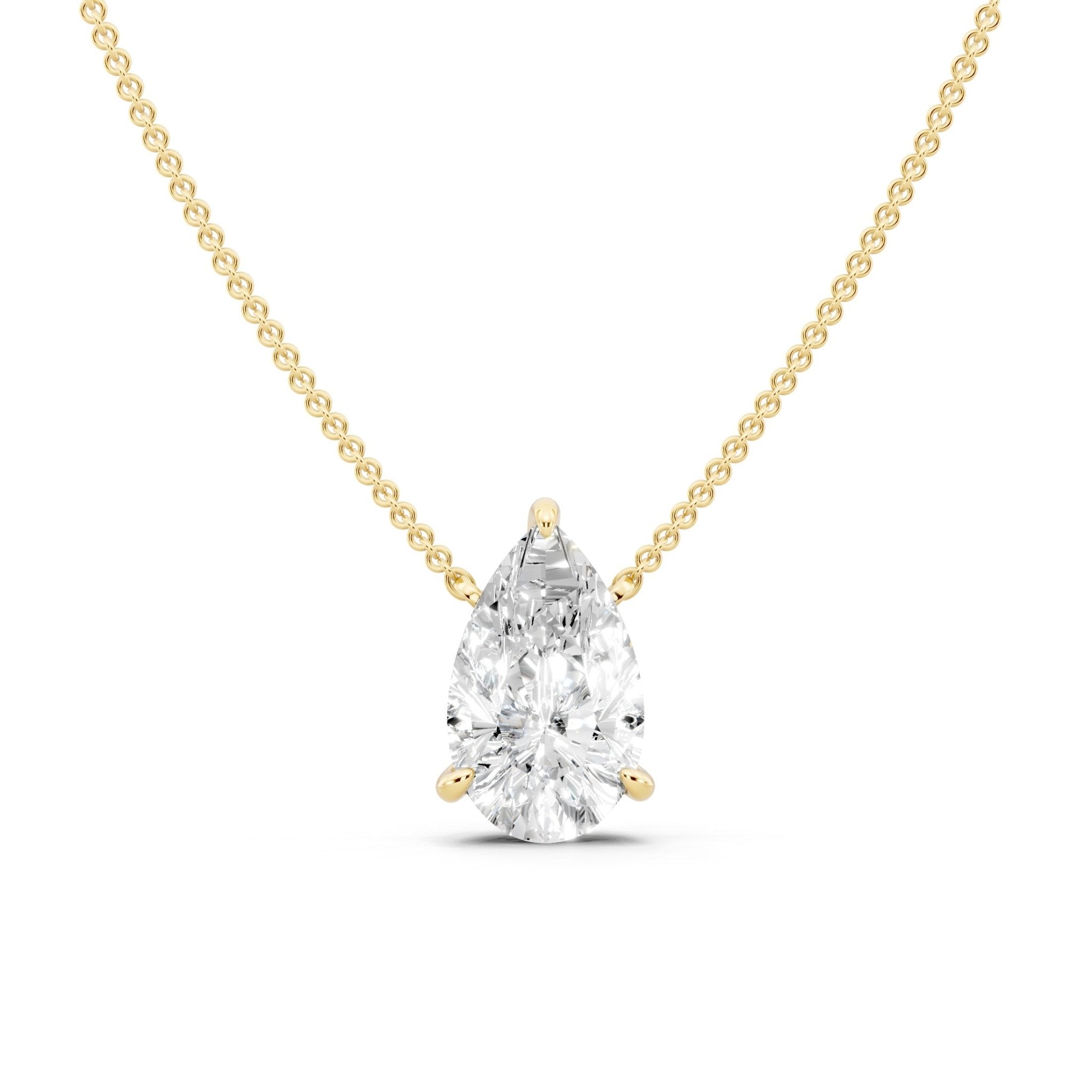
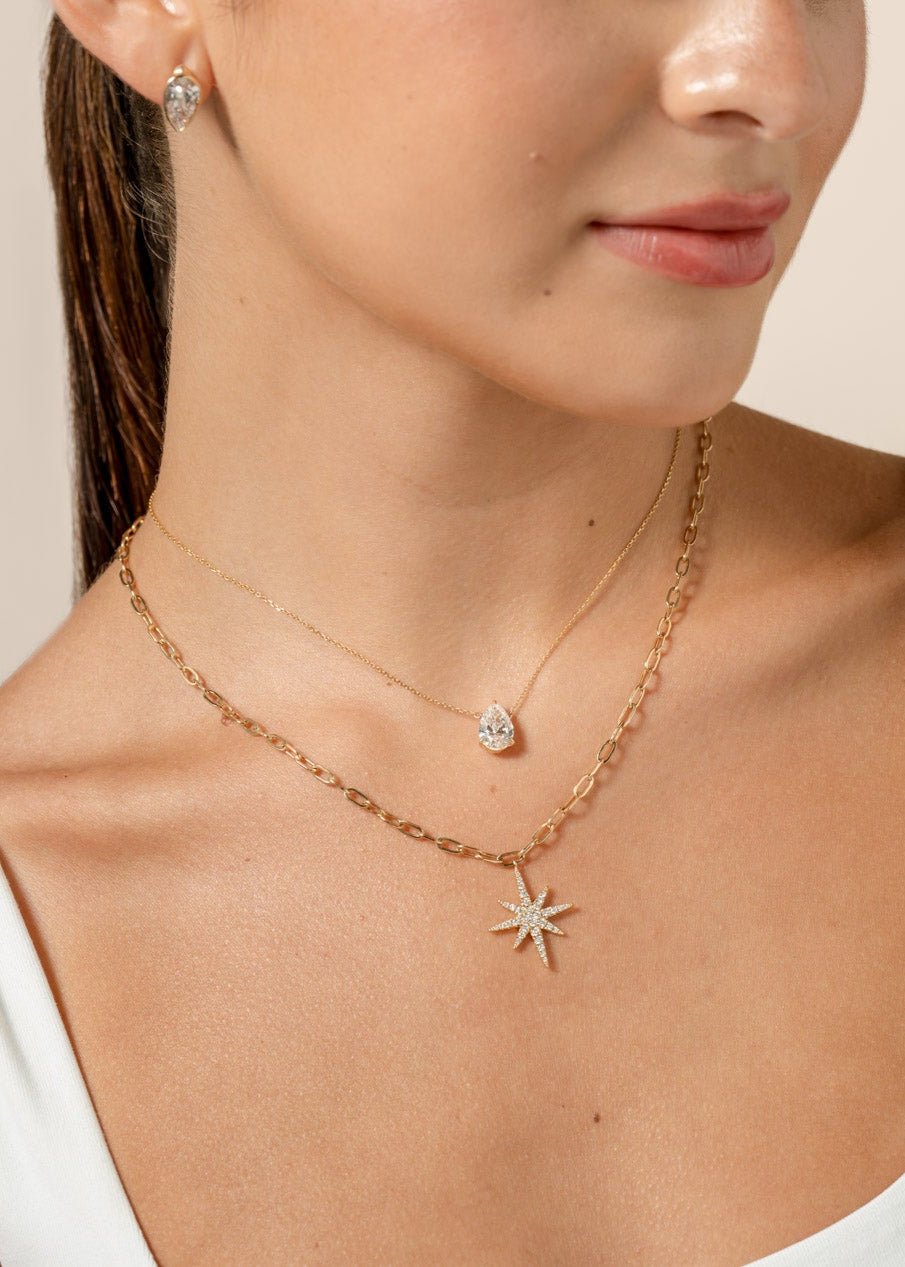
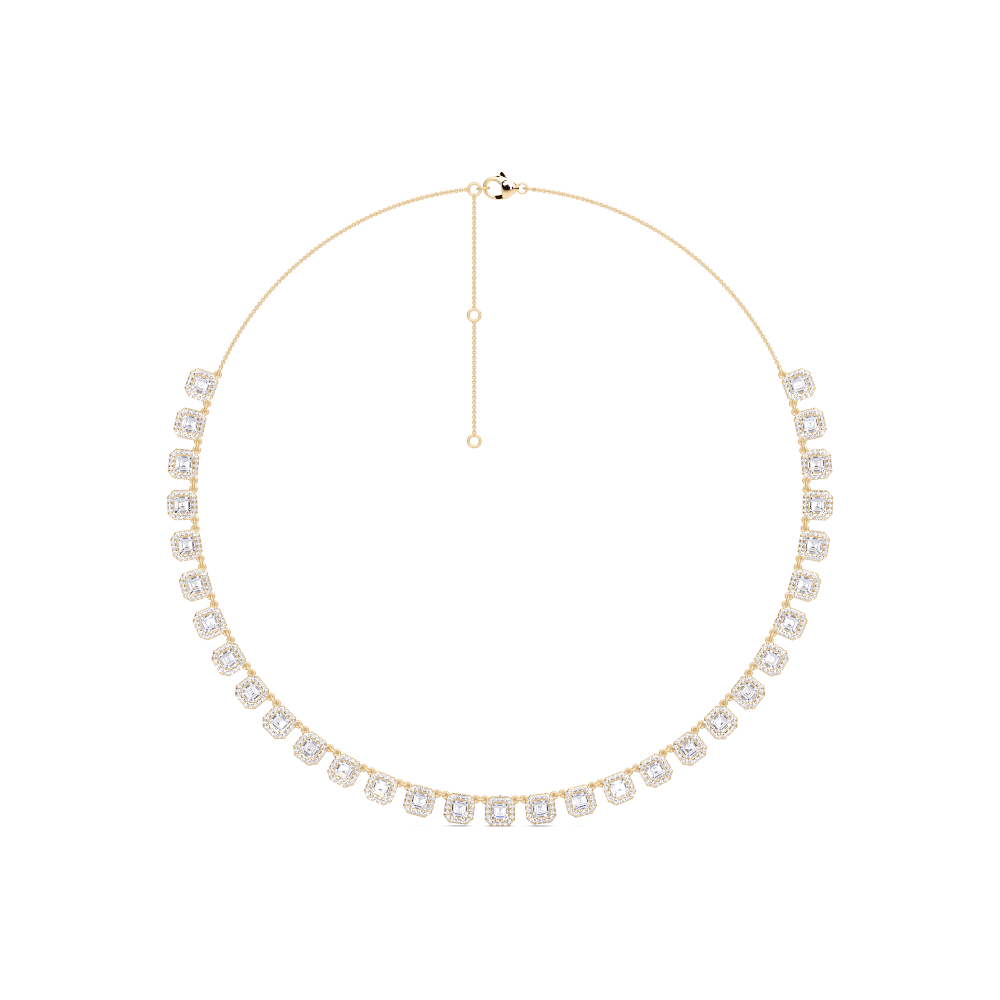
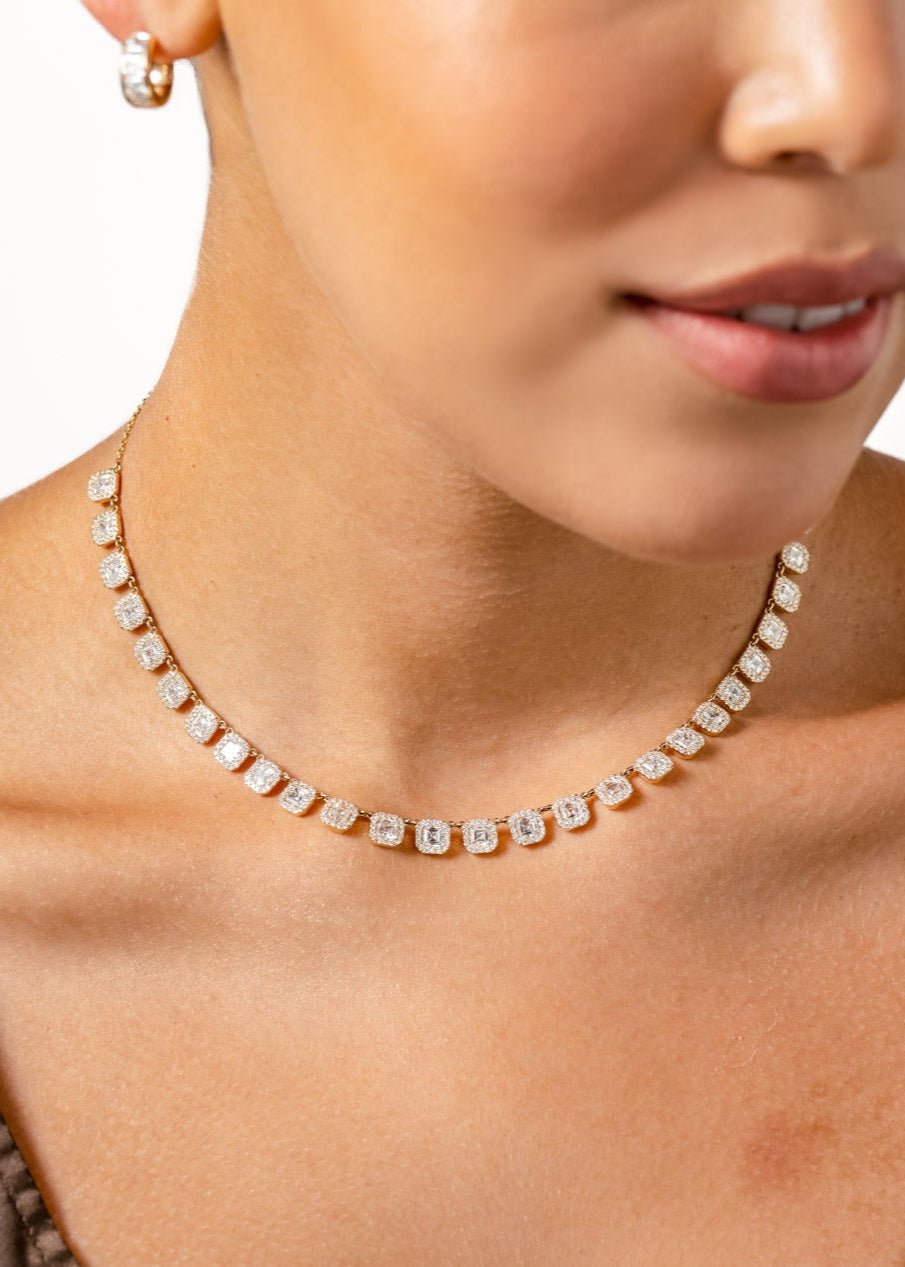
A solitaire necklace is one decision, which is why the shape matters so much. Ours run the full gallery: oval, pear, marquise, emerald cut, asscher, cushion, radiant, and round, from a fifth of a carat to more than ten, in lab-grown and natural diamonds on 14K gold. Bezel-set or prong-set, including a halo asscher for the maximalist.
Seema Fine Jewelry is a woman-founded studio with a showroom in Frisco, at The Shops at Starwood. Shape is personal, and no chart settles it. Undecided between a pear and an oval? Book a consultation and try both at the collarbone, in the showroom or over video.
Solitaire Necklaces: Frequently Asked Questions
What is a solitaire necklace?
A solitaire necklace carries one diamond and no side stones, suspended from a fine chain. The setting is either claw prongs, which lift the stone and let light in from underneath, or a bezel, which wraps the girdle in metal. Round and pear shapes here take six prongs, and the step cut shapes take four.
Can I choose the diamond for a solitaire necklace?
Yes. On the select-your-diamond pendants you pick the shape and the individual stone, then choose 14K gold or platinum for the setting. Lab-grown and natural are both available at every shape. Diamonds over one carat are certified by GIA or IGI and the report comes with the finished piece.
What carat size looks right on a solitaire necklace?
Around half a carat reads as a fine everyday piece and sits quietly under a collar. One to two carats is where the stone becomes the thing people notice first. Above two carats, and the pieces here go to just over three, a solitaire necklace holds a room the way a ring does on a hand.
Are prongs or a bezel better for a solitaire necklace?
Prongs let more light through the stone, so the same diamond looks brighter and slightly larger. A bezel protects the girdle, snags less on knitwear and is the safer choice for a necklace worn every day under clothes. On a pendant that sits against fabric all day, most people are happier with the bezel.