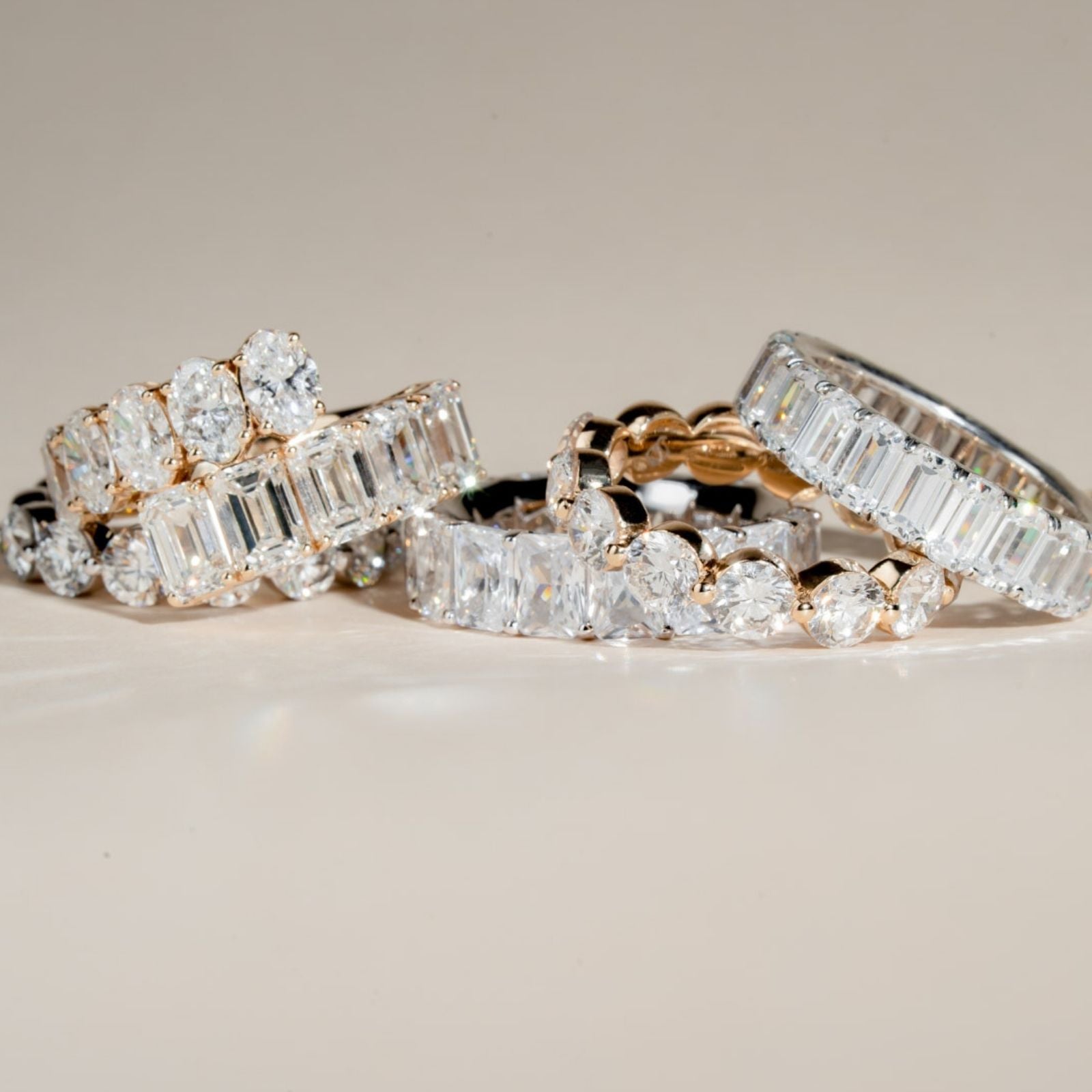
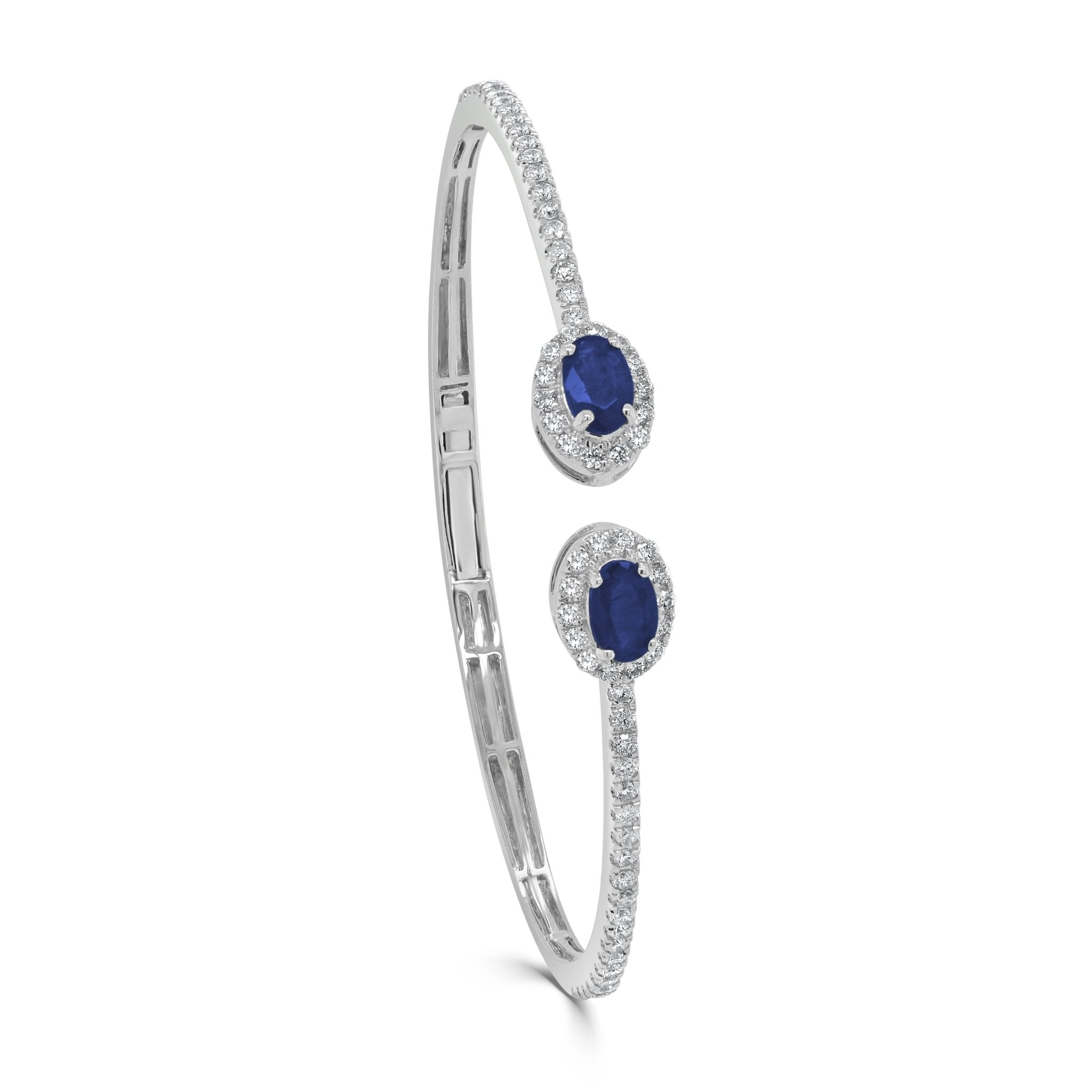
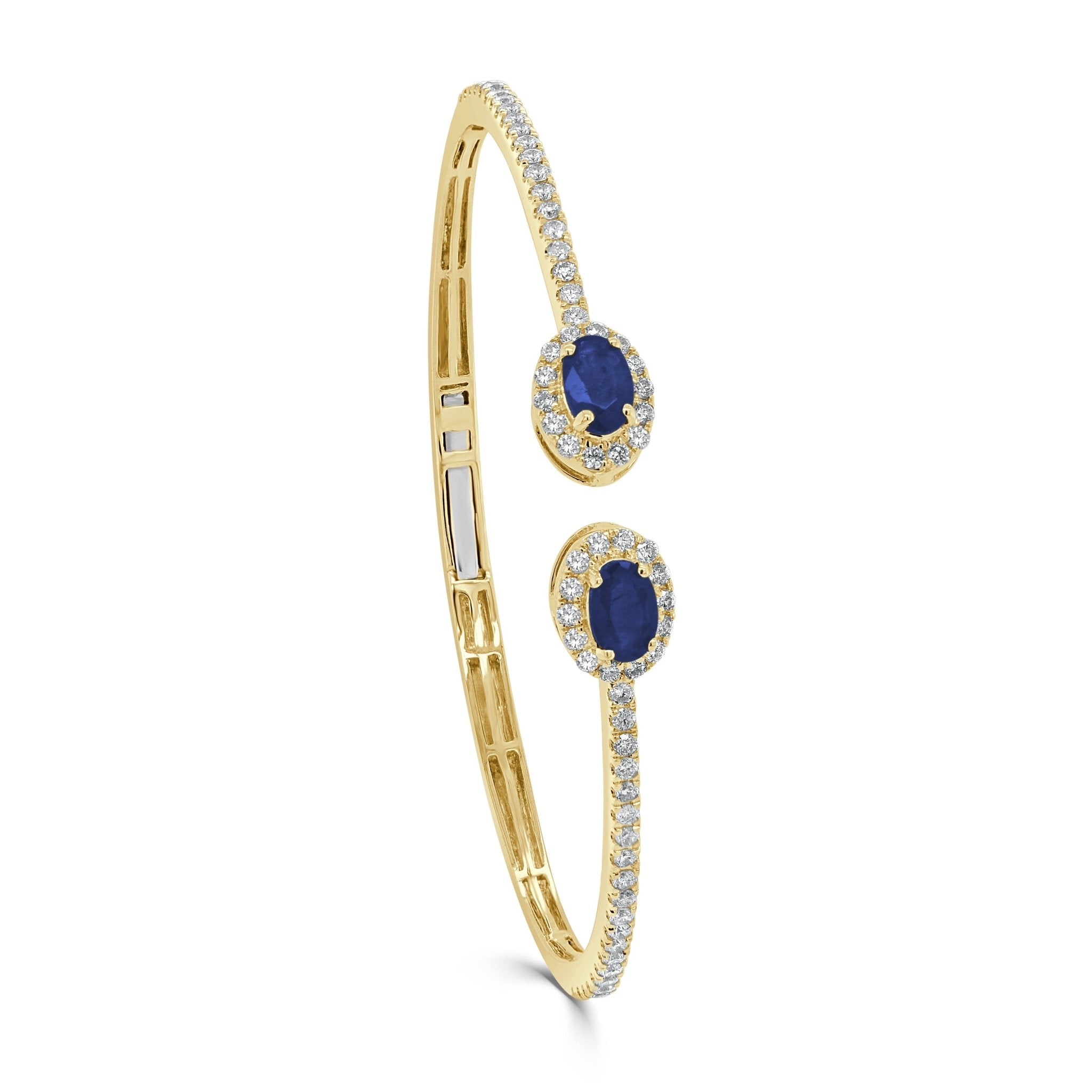
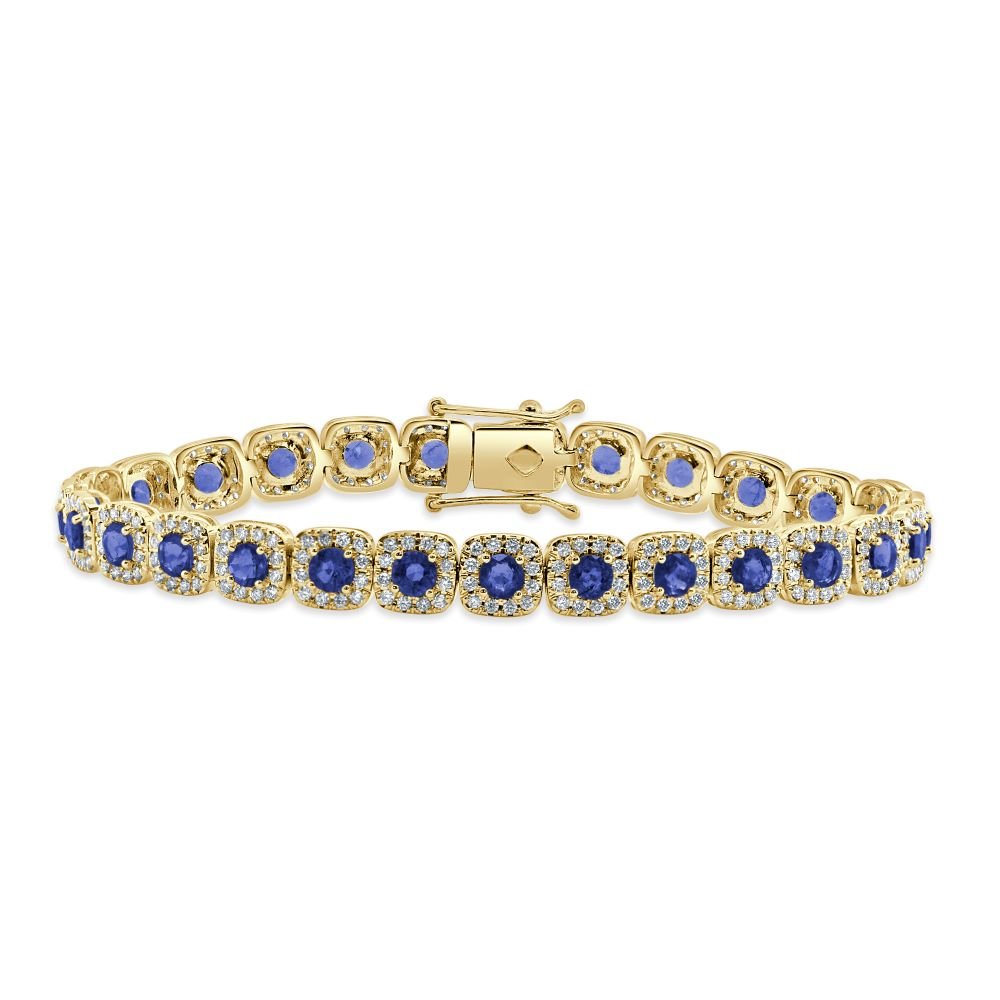
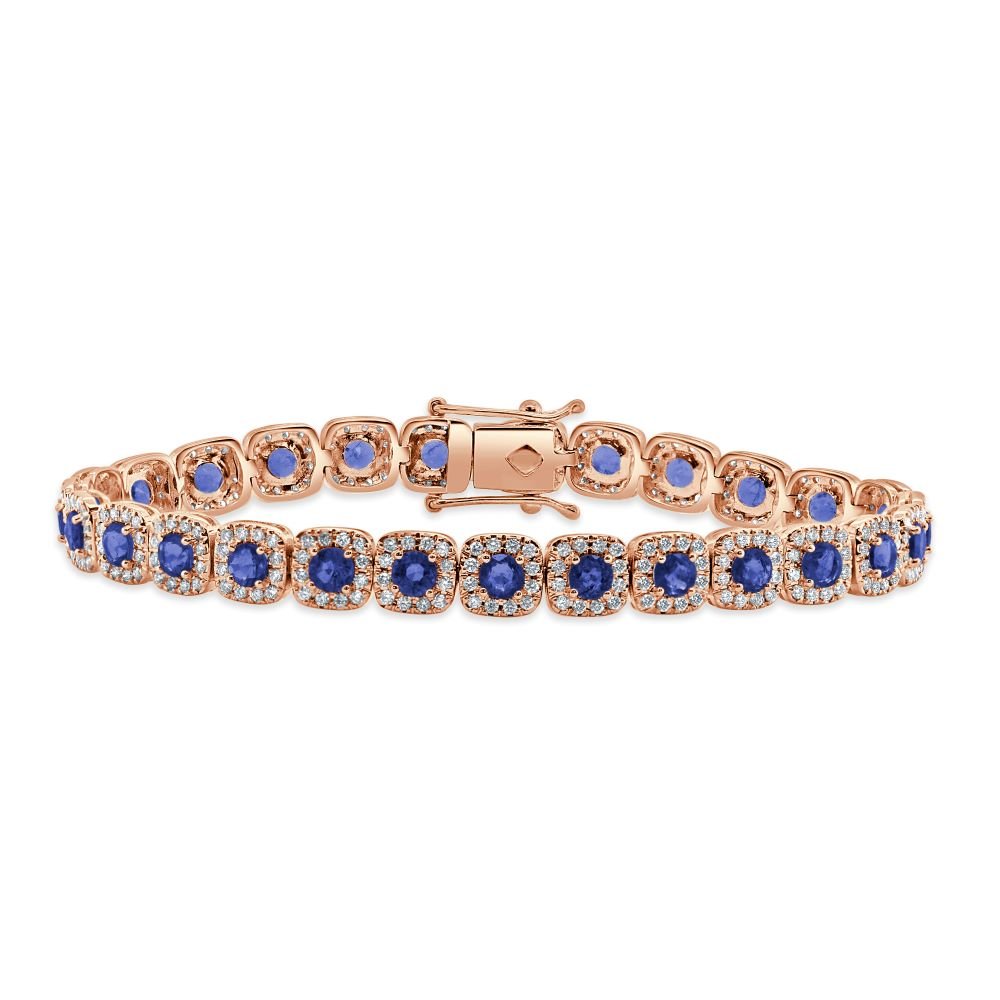
Sapphire comes to the wrist in two moods here: deep blue and soft pink. Ours run flexible eternity bangles in both, a sapphire and diamond cuff, an emerald-cut sapphire pave bangle, alternating sapphire and diamond rows, and pink sapphire tennis lines, from 0.14 to more than six carats. Hard enough to wear without thinking about it.
Seema Fine Jewelry is a woman-founded studio with a showroom in Frisco, at The Shops at Starwood. Blue or pink settles itself the moment both are on your wrist. Book a consultation and try them against skin, in the showroom or over video.
Sapphire Bracelets: Frequently Asked Questions
What colors do sapphire bracelets come in?
Sapphire occurs in blue, pink, yellow, green, purple and colorless, and only the red variety is given a separate name, ruby. The bracelets here are mainly blue and pink, with one rainbow design that graduates through the colors around the wrist. Pink sapphire reads warmer against yellow gold, and blue reads cleaner against white.
Are the sapphires in these bracelets treated?
Most sapphires in fine jewelry at any price are heat-treated, a permanent and long-accepted practice that improves color and clarity. Assume heat treatment unless a stone is documented otherwise. If you want an unheated sapphire, tell Seema's team before the piece is made and they will source one and document it for you.
How is pink sapphire different from ruby?
They are the same mineral, corundum. The trade calls the stone a ruby only when the red is deep and saturated enough, and lighter, pinker material is sold as pink sapphire. The line between the two is a judgment rather than a measurement, which is why a strong pink sapphire and a pale ruby can sit close in price.
Which sapphire bracelet suits everyday wear?
A flexible bangle with bezel-set stones is the easiest daily piece, because the gold rim sits proud of the sapphire and takes the knocks for it. A tennis line is the dressier choice and sits better on a wrist that is not at a keyboard all day. Both are made in 14K gold.